Audit each installed identity
Record actual wording, existing graphics and known condition before planning the change.
Planning example from Chicago Fleet Wraps
Keep vehicle status and artwork status distinct.
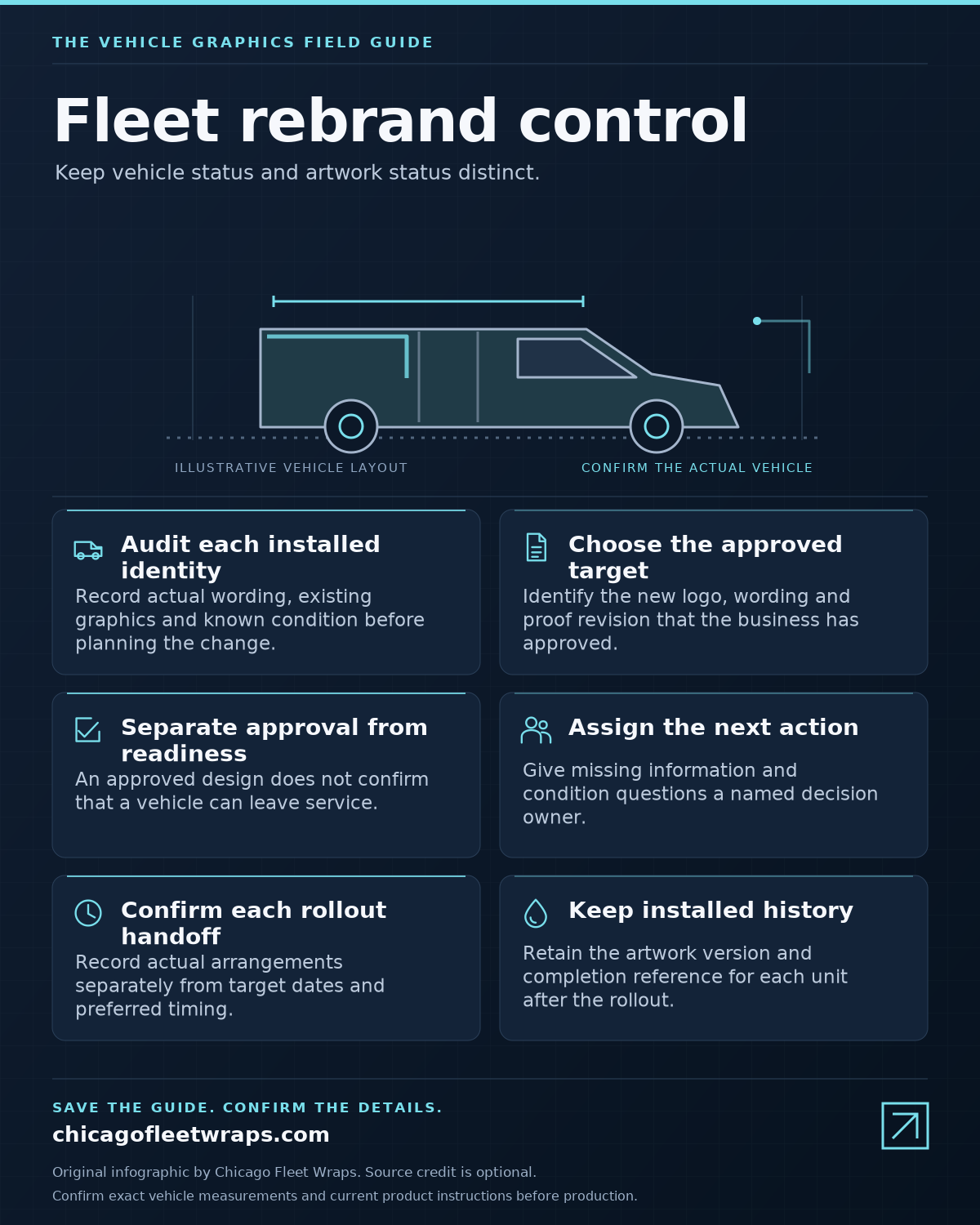
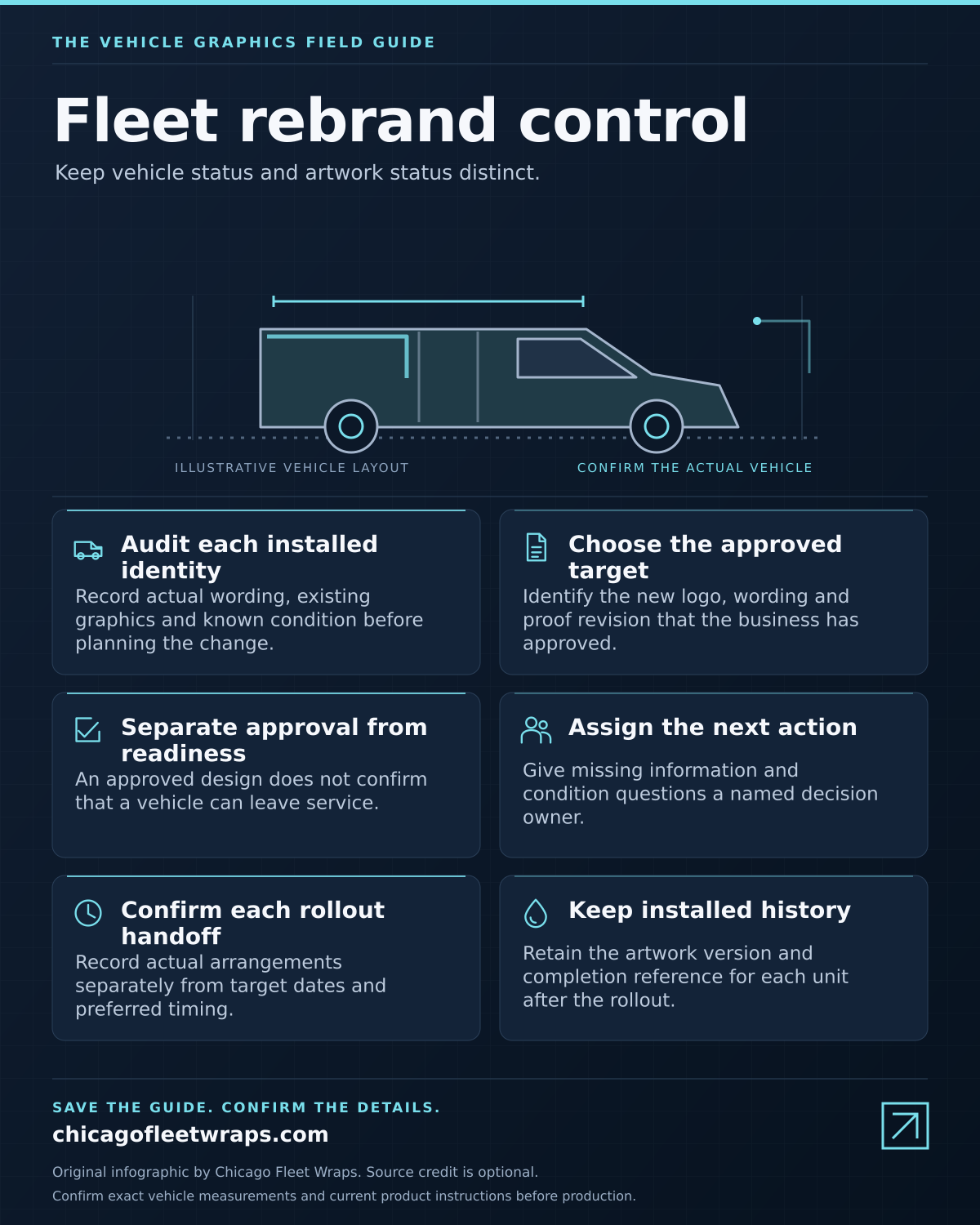
Original infographic from Chicago Fleet Wraps. You may reuse it; attribution is welcome and optional. Confirm project-specific dimensions, materials and instructions before using it for production.
The complete text
Record actual wording, existing graphics and known condition before planning the change.
Identify the new logo, wording and proof revision that the business has approved.
An approved design does not confirm that a vehicle can leave service.
Give missing information and condition questions a named decision owner.
Record actual arrangements separately from target dates and preferred timing.
Retain the artwork version and completion reference for each unit after the rollout.
Reference the original infographic on the matching Chicago Fleet Wraps page. The resource and CFW share an operator.
Adapt the caption to your article. Using the infographic does not require a backlink.
Practical guide
Build a useful starting record for a rebrand, including mixed artwork, changed contacts and unknown paint history.
Read the guide: Audit old fleet graphics before approving replacementsPractical guide
Create a simple approval trail that prevents retired fleet artwork returning during a phased rebrand.
Read the guide: Keep old, proposed and approved artwork versions separatePractical guide
Use separate approval and readiness states to coordinate vehicle graphics with operational availability.
Read the guide: Phase a rebrand around vehicles that must keep workingThey can share a proposed design group, but verify each unit’s installed identity and condition. Identical model names do not prove that the graphics, repairs or contact details are identical.
Read the detailed guide: Audit old fleet graphics before approving replacements
Only if the proposed group and its differences have been reviewed. Record which configurations the approval covers and which require their own adaptation.
Read the detailed guide: Keep old, proposed and approved artwork versions separate
That depends on your actual operating constraints and confirmed supplier arrangements. A phased plan can be easier to manage, provided the temporary mixed identity and customer contact details are intentional.
Read the detailed guide: Phase a rebrand around vehicles that must keep working
No. It supplies evidence for the removal discussion. Keep any supplier assessment, agreed exclusions and condition record as separate documents connected to the unit.
Read the detailed guide: Audit old fleet graphics before approving replacements